
Talrop’s Dual-Purpose Vision: Building Sustainable Ecosystems and Regional Transformation
Talrop was conceived as a dual-purpose organisation from the outset. One objective is to build a sustainable business ecosystem, creating global ventures, developing world-class real estate, supporting corporates, and partnering with governments. In parallel, Talrop carries a long-term mission inspired by Silicon Valley: to establish Kerala as a distributed headquarters for technology and entrepreneurship. The 1,000-unit ecosystem currently being built serves as the shared foundation for both objectives, enabling commercial scalability while advancing a larger regional transformation.
When Talrop began in 2015, expansion was not the immediate objective. The central question was fundamental: whether a single unit could sustainably integrate community development, talent creation, and execution without relying on charity or external support. Over the last decade, this focus evolved into building something deeper than individual companies or campuses, an infrastructure designed to be self-sustaining, scalable, and relevant at a global level, ultimately forming the foundation of the 1,000-unit ecosystem being built today.
Talrop’s First Techies Park: Proof of Concept for Scalable Ecosystems
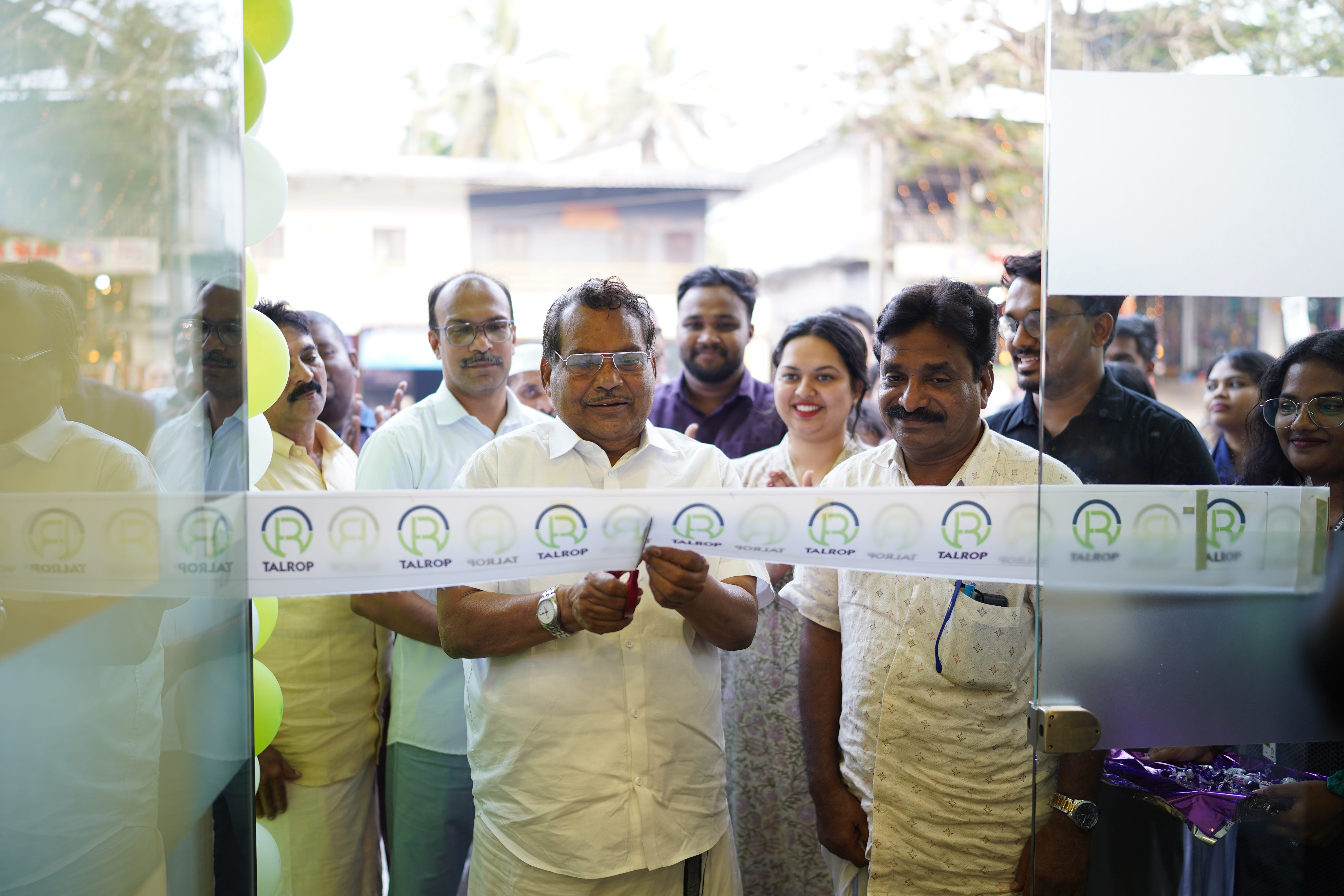
The years 2015 and 2016 were focused on creating Talrop’s first operational model and building a team capable of running a single unit independently. This effort culminated in 2017 with the launch of Talrop’s first Techies Park in Pangode village, inside Krishna Vilasam Upper Primary School, the founder’s alma mater. Designed as a 24-seat mini hub operating round the clock, the facility functioned for 16 hours as a community hub and skill development centre, and for 8 hours as a back-office execution unit. Revenue was generated through skill development programs and back-office services, while talent emerged organically from the local community. Several individuals who trained here later went on to found startups such as Deyoze, Mentwai, Whoyer, and Aidmak, with Steyp also beginning its journey within this ecosystem. This phase established a fully self-sustaining unit and marked Talrop’s transition from 0 to 1.
The first Techies Park validated Talrop’s core hypothesis by demonstrating that talent, founders, and startups could emerge organically from a community-driven ecosystem. Skill development translated directly into execution capability, leading to the formation of multiple startups and independent ventures. Importantly, the model was sustained through revenue generated from programs and services, proving that community development, entrepreneurship, and commercial viability could coexist within a single, self-sustaining unit.
Standardising Infrastructure and Talent Pipelines for Expansion
Between 2018 and 2025, the focus shifted from validation to scalability. What succeeds at one unit does not automatically translate to a hundred. During this period, Talrop developed its core framework: Infrastructure + Talent + Innovation. Significant effort was invested in translating this framework into a repeatable, scalable system. This included defining infrastructure standards, building structured talent pipelines, engaging investors, running outreach campaigns, developing brand ambassadors, and establishing strong state, national, and international partnerships. By 2025, Talrop successfully scaled from a single unit to 100 units, now collectively known as Talrop Village Parks.
To scale beyond a single unit, Talrop focused on systemising its operations and preparing the ecosystem for growth. This involved standardising infrastructure across all units to ensure consistency and efficiency, while simultaneously building structured talent pipelines to support both community development and startup execution. Strategic partnerships with investors, brands, and institutions were established to strengthen resources, credibility, and long-term sustainability, creating a robust foundation for the next phase of expansion.
Dual-Purpose Infrastructure in Action: Training by Day, Back-Office by Night
From April 2026, Talrop is taking its ecosystem to the grassroots by activating 100 Village Parks across Kerala as full-day Skill Development Hubs and distributing overnight back-office centres. Each Village Park operates from 6:30 AM to 8:30 PM for skill development, offering flexible 1–3 hour learning formats for school students, college students, working professionals, and those seeking to upskill or reskill. The hubs support NSDC-recognised domains, including healthcare, AI and emerging technologies, IT and digital skills, soft skills, sales, design, and industry-specific vocational programs, aiming to equip students with skills that lead to real work, income, and mobility. Talrop’s internal ventures, as well as external partners, leverage these hubs to deliver quality programs to batches of up to 2,500 students, while Talrop manages marketing, onboarding, student management, and fee collection.
From 9:00 PM to 6:00 AM, the same infrastructure functions as a distributed back-office service for US companies, providing scalable, seat-based support for startups, SaaS companies, agencies, and enterprises across roles like customer support, tech support, QA, data operations, content, design, and development support. Talrop manages recruitment, training, infrastructure, and operations, while companies can choose Talrop payroll or their own. This dual-purpose model not only generates revenue but also strengthens local employment, talent pipelines, and the sustainability of Village Parks, with a projected ₹125 crore turnover from skill development and ₹250 crore from back-office operations at full capacity. By combining skill development with global execution, Talrop is redefining distributed, scalable infrastructure for the future of work.
Strategic Growth Towards a Distributed Technology Hub
By October 2026, Talrop’s 100 Village Parks are expected to operate at full capacity, with a projected revenue of ₹375 crores, setting the stage for the next phase: scaling to 1,000 units. Over three years, from 2027 to 2029, Talrop will expand its ecosystem, achieving full execution by 2030 and completing its Silicon Valley mission. At this scale, the organisation’s dual purposes fully converge on the same infrastructure and network that support ventures, real estate projects, corporate initiatives, and government programs, also advancing technology, entrepreneurship, and talent development across Kerala. This phase marks the culmination of Talrop’s journey, from 0 to 1, 1 to 100, and 100 to 1,000, establishing a sustainable, distributed infrastructure that simultaneously drives talent development, entrepreneurship, and regional economic transformation.
Redefining Talent, Entrepreneurship, and Community Development
Talrop’s journey from a single 24-seat hub to a 100-unit ecosystem and soon to 1,000 units demonstrates the power of combining vision, community, and execution at scale. By building infrastructure that simultaneously nurtures talent, drives entrepreneurship, and delivers tangible business outcomes, Talrop is not only transforming Kerala into a distributed technology and innovation hub but also redefining how sustainable ecosystems can function globally. As the organisation moves into the next phase, the potential impact is enormous: thousands of skilled professionals, thriving startups, empowered communities, and a new model of distributed, resilient economic growth. The future is not just promising, it is already being built, one Village Park at a time.